

Shared AR. One room. One world. Unlimited experiences.
Everyone sees it. In the same place.
No headsets. No one left out.
Projection, dvLED, walls, floors, screens and tablets, all registered into one shared world scene from a single pass of structured light sensing, in minutes.
Physical. Digital. Display. Unified.
ARtemis is STL’s hardware-agnostic software platform to unify real
and virtual to achieve Shared AR.
ARtemis achieves Shared AR by using cameras to: 1) sense as-built physical spaces, 2) create a 3D model, 3) align the model (digital twin) to the contents local space, and 4) align the displayed image to the physical surfaces. The software registers every surface, display and tablet into a shared unified scene, so every pixel knows its location in the as-built physical space.
Traditional calibration systems only align displays to each other. ARtemis understands the entire 3D space and makes that model open for use for dynamically rendered content, lighting and sound.
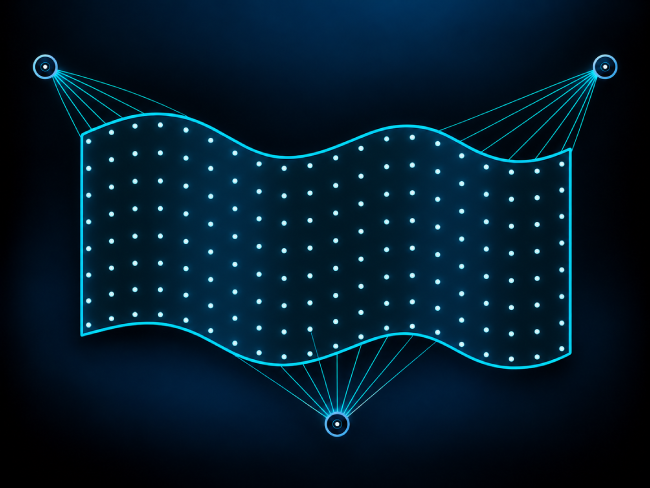
Sensing the surfaces
Capture the real geometry of the room: walls, floor and every uneven face.
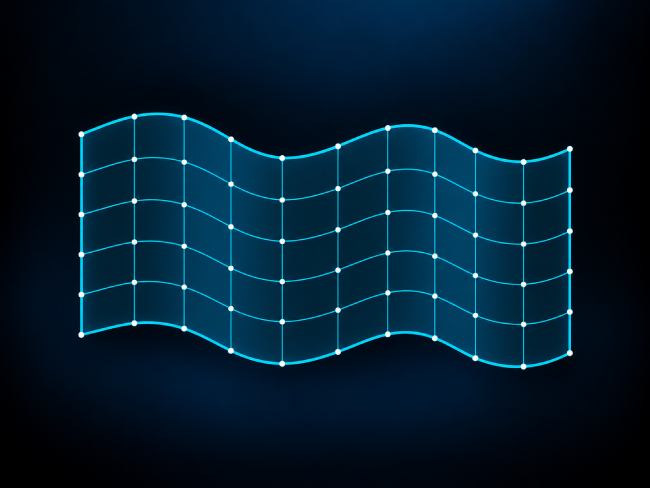
Create a model
Turn the scan into an accurate 3D model of every surface in the room.
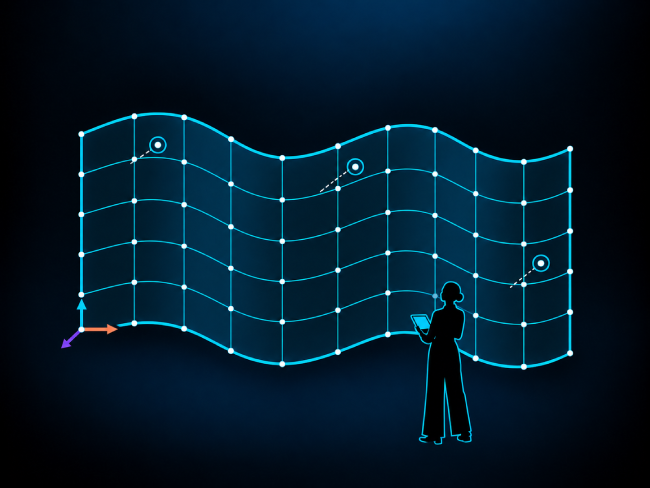
Align elements to local scene coordinates
Register the room into one shared space, so every device agrees on where everything is
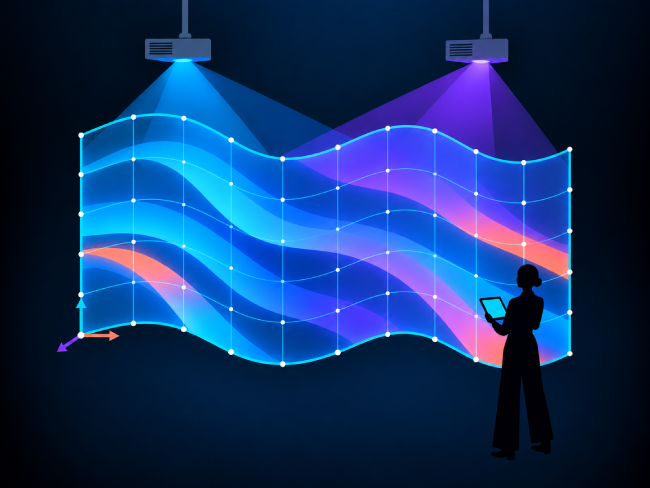
Align displays to the surface
Warp and blend every display onto the real geometry, so the image fits the surface and the seams disappear.
ARtemis. Maintains. Perfect.
Set once. Remains true.
Automatically sense and register the physical space, warp and blend, no camera targets to place, and recalibration that keeps the rig accurate show after show.
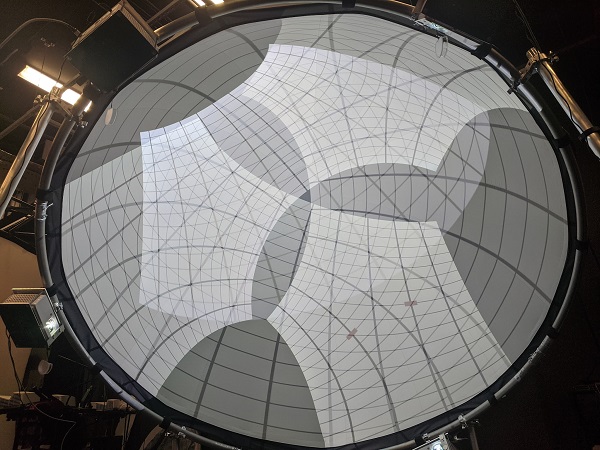
Sensing
Measures real surfaces into digital form turning real into digital.
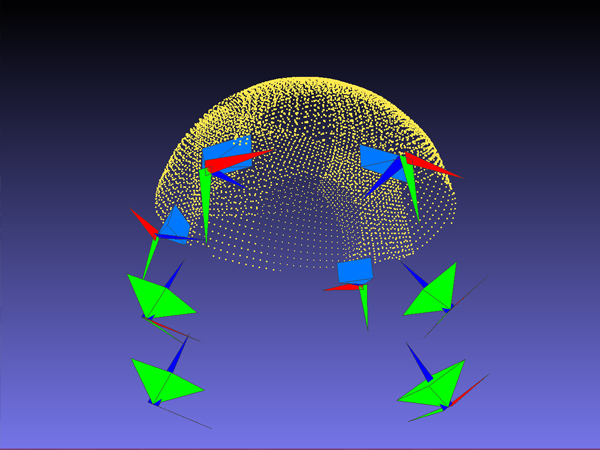
Registration
Solves the transforms that put the constructed 3D surface model, the displays, the cameras, handhelds and the content into a unified coordinate space.
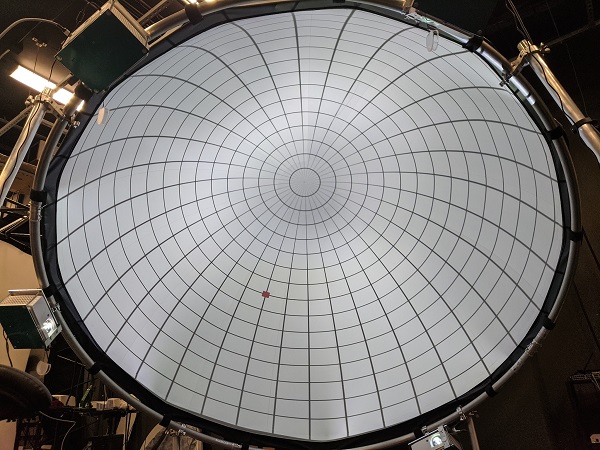
Mapping
Assigns image pixels to places on the as-built physical surface converting digital into real.
ARtemis. Expanding. Possibilities.
Simple. Scalable. Immersive.
Public & Cultural
01
Civic & Public

Museums • Science Centers • Planetariums • Cultural Sites • Zoos • Aquariums
Exhibits open faster and stay open, with no specialist on call and displays you can reuse from one exhibit to the next.
02
Ticketed Attractions

Immersive Venues • Theme Parks • Exhibitions • Location-Based Entertainment
Every night looks like opening night. Alignment is checked between shows, so the illusion never breaks and seats stay full.
Commercial & Live
03
Live Events & Experiential

Touring • Trade Shows • Brand Activations • Rental & Staging
Load in fast with the displays and dvLED you already own. As-built model created for content management and alignment.
04
Corporate Experience Centers

Briefing Centers • Showrooms • Innovation Labs
Seamless, flawless visuals with interactions guests drive themselves, not just watch.
05
Design & Construction Visualization

Architecture • Interiors • Design Review
Walk the design at true scale before a wall goes up, together, on dimensions you can trust.
Mission & Readiness
06
Simulation & Training

Defense • Aviation • First Responders • Mobile Simulators
Precise, realistic training that’s ready when crews are, without days of service downtime, even in a mobile trailer.
07
Command & Response

Emergency Management • Mobile Command • Field Operations
Portable shared displays that deploy fast for multi-user command, training, and response in the field.
Why Artemis
Alignment Made Easy
From first install through daily operation, Artemis™ gives integrators, venue teams, and partners a common technical language for registration.

Technicality Meets Simplicity
Artemis makes complexity legible without hiding the controls that experts need. It is technical enough for the integrator yet clear enough for the operator.

Scale Without Limits
Use any number of displays in any shape with preserved visual precision, subpixel alignment, and per-pixel color management.

Immersive and Interactive
Engage your audience with interactive integrations such as laser pointers or tablets, turning a 2D surface into a part of their reality.
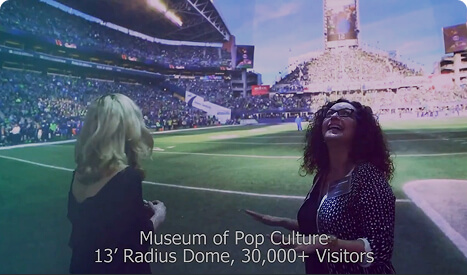
Two museums
and a simulation training
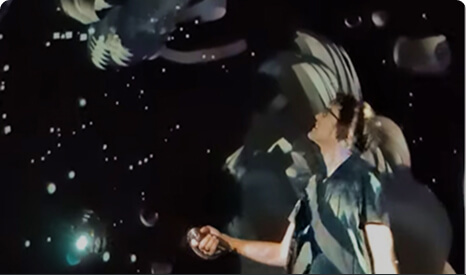
California African
American Museum
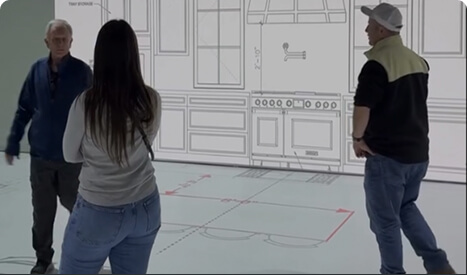
Architectural walk through, a Summit system
ARtemis. The. Justification.
Whatever the room (a museum gallery, a touring stage, a design review or a training simulator), the same problems come up: getting displayed content to sit precisely on as-built surfaces, and keeping it there. ARtemis handles both automatically. Its cameras sense the room, the software builds an accurate model of every wall, floor and object, and registers each display to that model, with no control points to place and no specialist to fly in. It works with the display technology you already own, from any brand, and when something drifts or gets bumped, recalibration takes minutes. Systems go up faster, come back from problems quickly, and spend their time running shows and sessions instead of sitting idle waiting for alignment.
Underneath that convenience is something more lasting. ARtemis doesn't just line displays up with each other; it registers the whole room into one shared world space, so every surface, projector, floor and tablet agrees on where everything is. And because STL publishes that space openly, content can be rendered live onto the room as actually built, and other tools can use the same measured space. The result is shared augmented reality that is measured, not assumed: precise enough to trust, simple enough to maintain, and open enough to build on.
ARtemis. Future. Forecast.
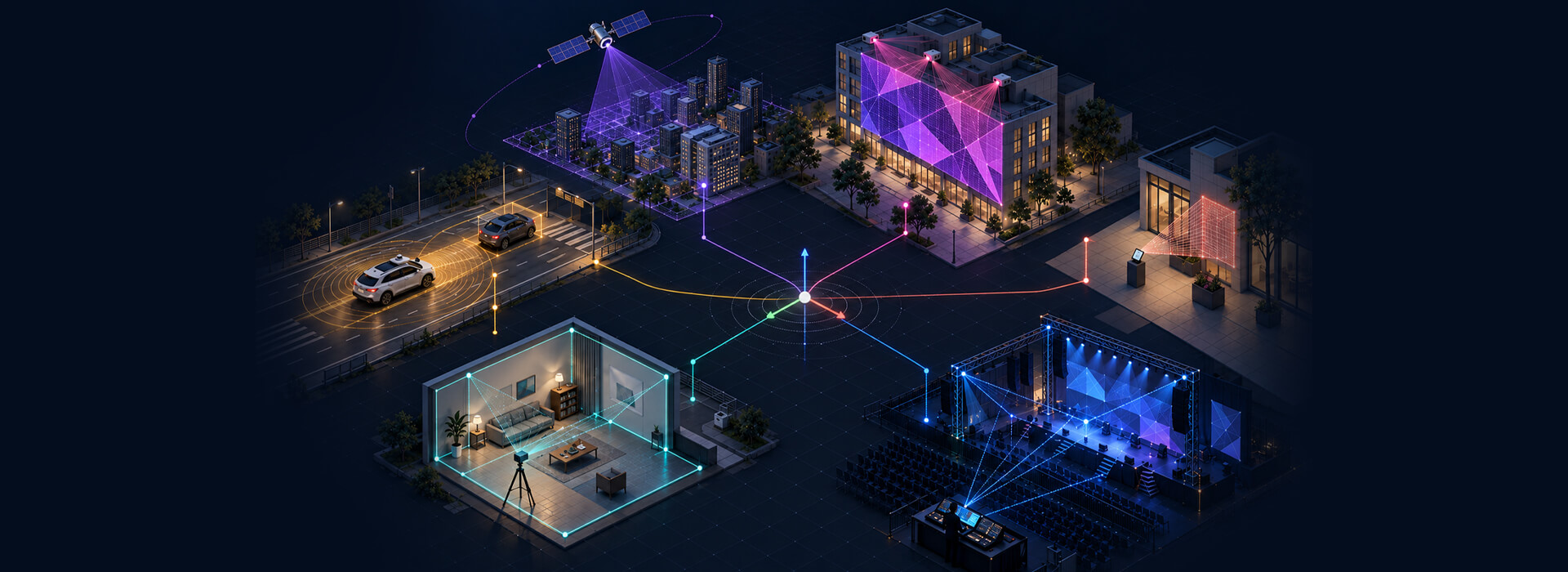
Industry needs machine-readable representation of the physical world
Everyone wants AI to interact with the real world but AI cannot act in the physical world until the world is machine-readable, and machine-readable means knowing where things are. Leading companies are aggregating huge numbers of passive observations from cars and phones to generate near-centimeter accuracy of mapped places. Deriving reality by averaging millions of unstructured samples has its limits.
Ultimately, industry needs a finer ruler to arrive at ground truth. From satellites, then towers, then camera-based positioning, then environment scanning. In every stage the physical is read. In the last stage we display back onto the physical world.
Experiences Powered by 










Discover how Artemis can transform your next project.